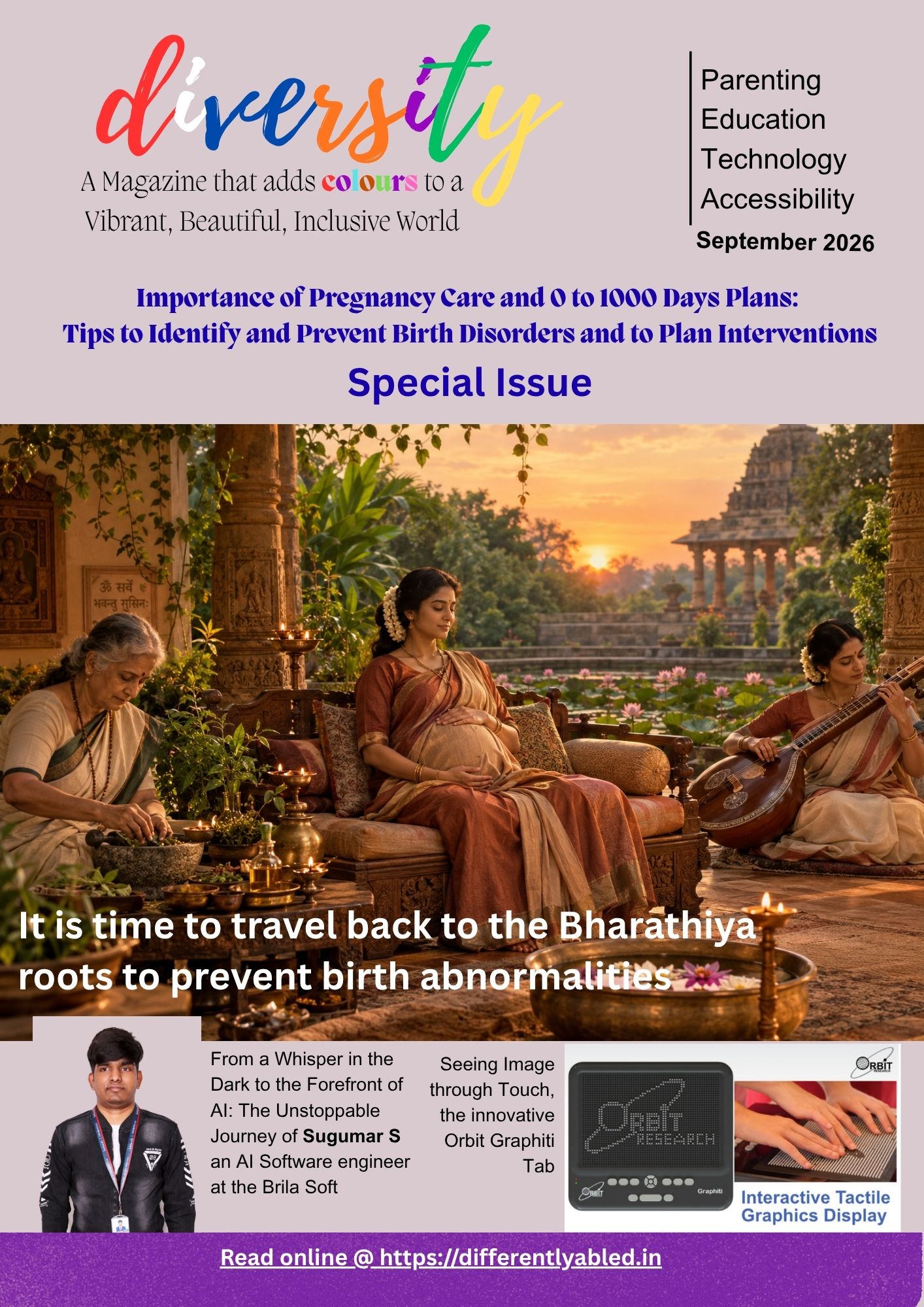
The September 2026 issue of Diversity explores the profound continuum of inclusion from the beginnings of life to the frontier of artificial intelligence...
Exploring the intersection of genetics and prenatal risk factors—from prematurity and hypoxia to maternal infections and preventable teratogenic exposures—in conditions like Autism, ADHD, Cerebral Palsy, and ROP.
How ancient Indian Garbha Sanskar aligns with modern epigenetics and fetal programming through the four yogic pillars of Aahar, Vihar, Achar, and Vichar to buffer stress and support healthy fetal development.
The extraordinary journey of Sugumar S, who defied childhood blindness, rural poverty, and systemic exclusion to graduate first in his class, build production AI systems at Birlasoft, author open-source NVDA tools, mentor visually impaired girls, and prepare for Ivy League research.
A detailed scientific journey through fetal brain development from the neural tube in the first four weeks to cortical folding, neuronal migration, and synaptic pruning, highlighting the vital need for prenatal discipline and stress reduction.
Nine common modern parenting habits that hinder infant brain architecture—including screen exposure, irregular sleep, chronic stress, and missing serve-and-return communication—with practical, loving solutions.
Groundbreaking neuroimaging research tracking neuroscientist Liz across her pregnancy proves that 'mommy brain' is not cognitive decline, but sophisticated neural specialization, enhanced connectivity, and lifelong cognitive adaptation.
A comprehensive look at Orbit Research's Graphiti, a revolutionary 2,400-pin variable-height tactile display that brings charts, CAD, astronomy, live video, and interactive drawing to the fingertips of visually impaired learners worldwide.
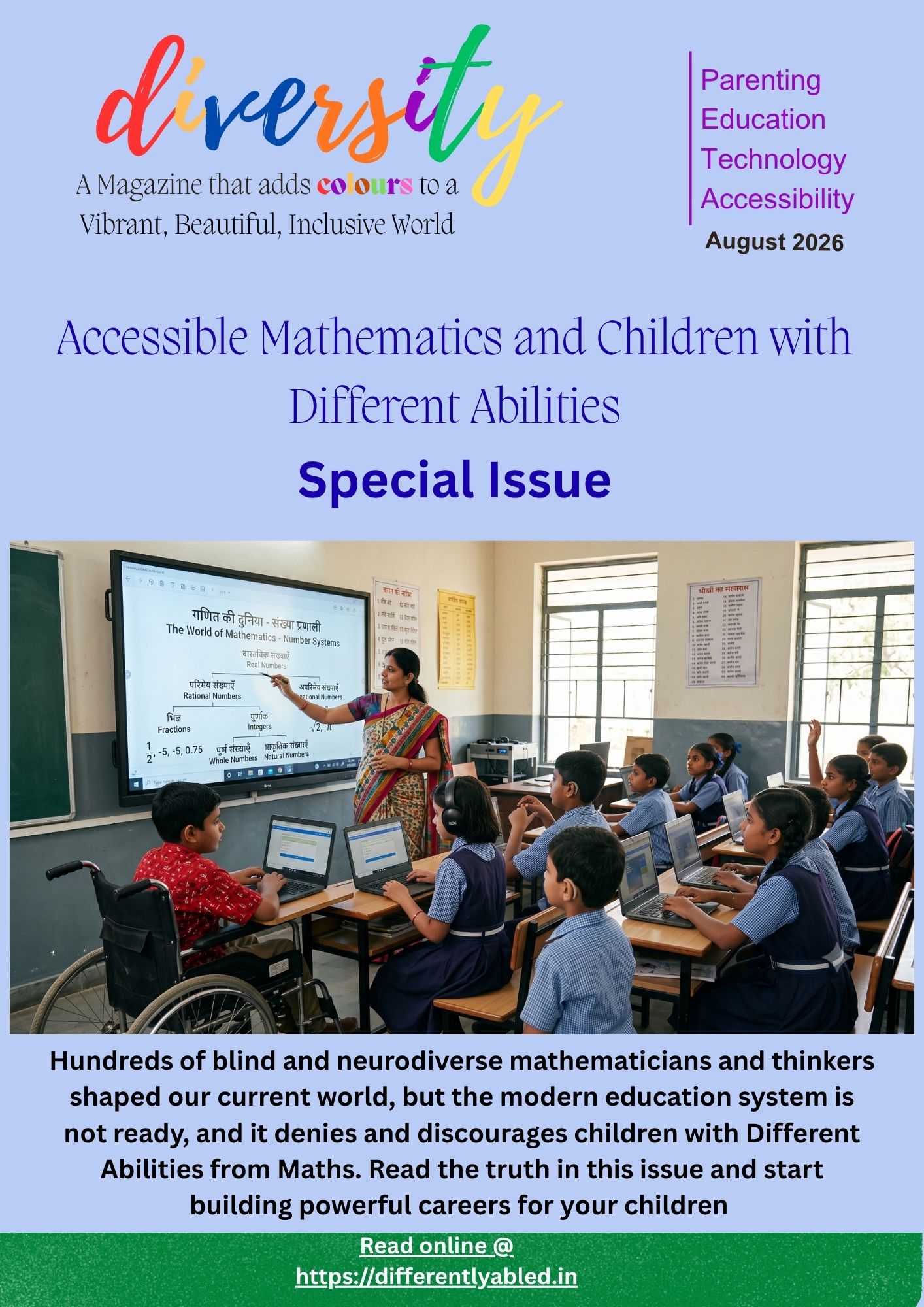
The August 2026 Special Issue of Diversity champions the theme of Accessible Mathematics and Children with Different Abilities...
A mother’s plea for institutional independence exposes how mainstream schools resist assistive tech accommodations for capable students despite massive national budgets.
Actionable guidance for caregivers navigating the unique physical, emotional, and social complexities of puberty for autistic adolescents, highlighting theater and structured activities.
Why mathematical fluency is an essential cognitive workout and the non-negotiable backbone for emerging AI-era STEM careers.
By Dr. G S Ramaiah. The inspiring life of Andhra Pradesh's blind mathematical prodigy and violin virtuoso, alongside historical blind mathematical giants.
How the creator of AsTeR transformed technical reading for visually impaired scientists globally, proving that learning math is as important as breathing.
By Er. P. S. Jothish. How MathML, audio-tactile graphics, and Universal Design eliminate barriers in math education for blind, deaf, and neurodivergent learners.
Untangling the internal collision between ADHD cravings for novelty and Autistic needs for structure, offering mentors design-thinking strategies.
By Ram Kamal. The SEAT framework (Sensory, Escape, Attention, Tangible) and the Antecedent-Behaviour-Consequence (ABC) model for mindful, compassionate intervention.
This edition of Diversity Magazine contains featured articles, guides, and resources for caregivers and families.
This article shares the inspiring educational journey of T R Govind, a visually impaired student who transitioned from blind school to a mainstream international curriculum, eventually pursuing a Bachelor of Commerce at the University of Newcastle in Australia. Govind details the academic hurdles he faced—ranging from screen-reader incompatibility with visual data and strict online submission policies to managing independent study and cross-cultural group work. To overcome these barriers, he curated a robust technological toolkit utilizing open-source document readers, document format conversions, AI models, and university accessibility services. Through resilience, proactive communication, and strategic planning, Govind successfully navigated his first semester, achieving top grades and proving that appropriate accommodations and determination can conquer high-level academic obstacles.
This article details the journey of Aswathy, a brilliant Grade 11 student in Tirupati diagnosed with Auditory Neuropathy Spectrum Disorder (ANSD), a condition where sound is heard but cannot be processed into recognizable language by the brain. Facing immense academic hurdles as she pursued medicine, Aswathy received expert medical diagnosis and a tailored educational intervention. By using a Chromebook equipped with real-time transcription powered by AI and a teacher's Bluetooth microphone, combined with lip-reading and vocal exercises, Aswathy is successfully able to follow classroom lectures, continue her studies, and overcome speech challenges to become a role model for students with similar disabilities.
Mitra Jyothi is a pioneering Indian organization dedicated to bridging the digital divide for visually impaired individuals through comprehensive digital literacy programs and assistive technology. By offering practical training in computer operations, screen readers, professional skills, and mobility taught by visually impaired instructors, the center equips students with the tools needed for independence and employment. Beyond technical proficiency, the program fosters confidence, leadership, and holistic personal growth, empowering hundreds of students from diverse backgrounds to thrive in a technology-driven world.
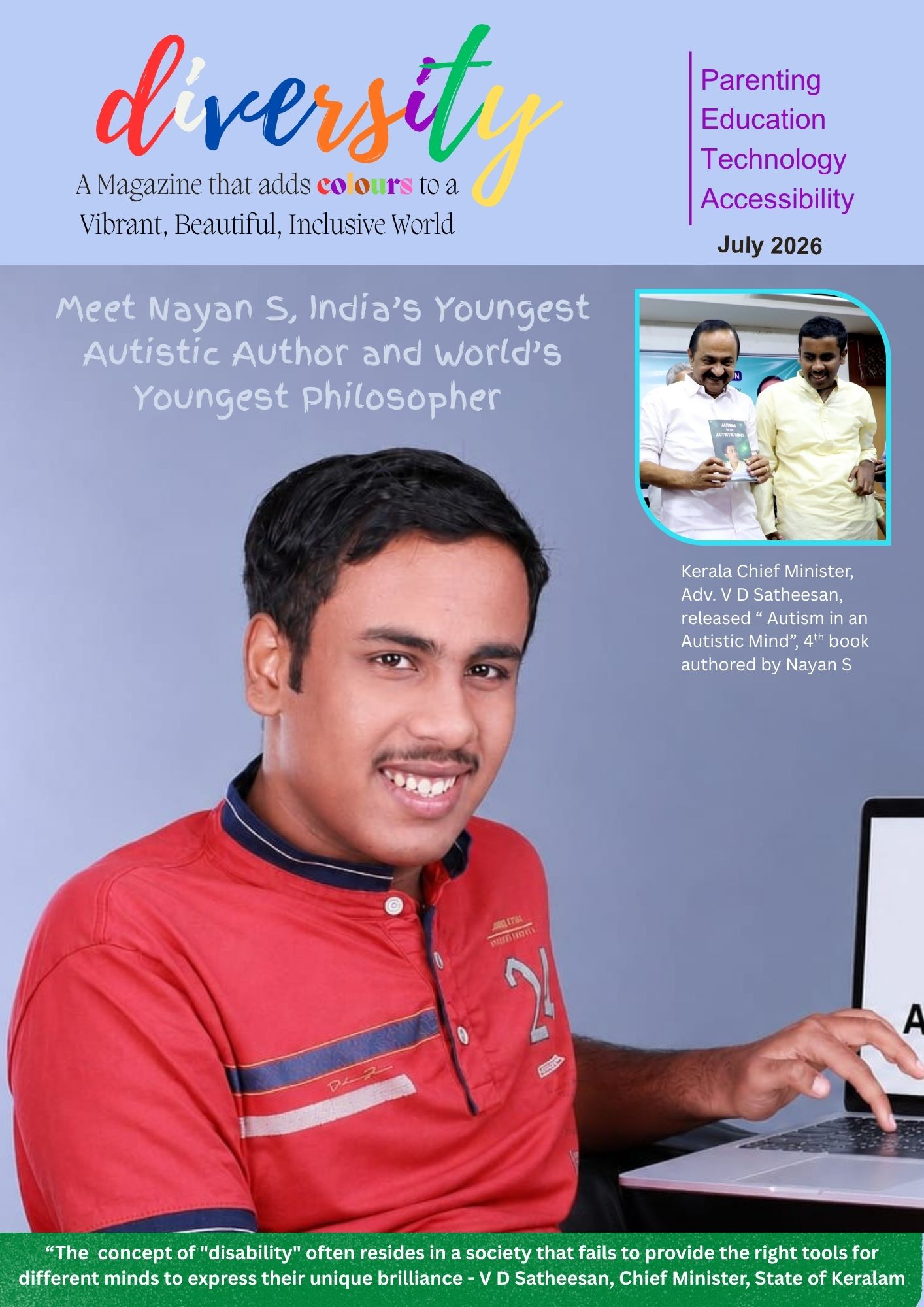
This article highlights the remarkable journey of 17-year-old non-verbal autistic writer and philosopher Nayan S, who launched his fourth book, Autism in an Autistic Mind. Diagnosed with autism at age two, Nayan overcame sensory and physical barriers to communication by using a laptop at age five, typing thoughts with a single finger. Supported deeply by his family—particularly his mother Priyanka through a profound mental connection—Nayan has built an extensive portfolio including literary works, filmmaking, and linguistic skills. The piece also explores the broader movement of non-verbal autistic writers, such as Aditi Sowmyanarayan and Krishna Narayanan, who leverage digital literacy and text-to-speech technology to share their brilliant, philosophical insights with the world.
This inspiring article chronicles the life and mission of Mrs. P. Thankamani, a dedicated educator who has spent over four decades championing neurodiversity and inclusive education. Beginning her career as a conventional teacher, an impactful 1990 encounter led her into special education. After serving 32 years as Principal of the Marian Play Home, she refused to slow down upon retirement and co-founded the Society to Educate and Empower the Differently Skilled (SEED) in 2024. Together with co-founder Mr. T. J. Mathew, she pooled her retirement savings to construct a state-of-the-art, permanent sanctuary at Malamukal, Thiruvananthapuram, designed to provide lifelong support, vocational training, and a secure community for children and adults with Autism Spectrum Disorders and other developmental disabilities.
The June 2026 edition of Diversity Magazine shines a powerful spotlight on empowerment, inclusion, and resilience, anchored by a poignant tribute to mothers advocating for children with physical and cognitive challenges. Through the inspiring Mummy No Cry cover story and editorial, this issue highlights groundbreaking assistive technologies like the Chakshumathi mobile app and Eyes Free Computing that dismantle educational barriers. Readers will explore key pathways from the classroom to careers, essential guides on autism advocacy, and insights into bridging funding gaps for rehabilitation. Featuring creative showcases like the Global Ability Photography Challenge and reflective poetry, this edition celebrates the triumph of advocacy, the power of collaborative support systems, and the relentless spirit of those redefining societal limitations.
This article details a closed-door convening hosted by the Sri Aurobindo Society, in partnership with Pacta and Dasra, focused on the CSR funding landscape for organizations supporting differently abled individuals in India. Leaders from civil society, philanthropy, and government gathered to discuss critical challenges such as funding gaps, data discoverability, and the need for stronger communication between grassroots non-profits and corporate donors. The event highlighted data-driven insights and emphasized that true inclusion requires intentional, sustained investments and genuine dialogue to empower organizations driving on-the-ground change.
This inspiring cover story highlights the journey of Alpa Dhyani, a mother who fiercely championed inclusive education for her visually impaired son, Dhvaj. Refusing a segregated path, Alpa supported Dhvaj through mainstream schooling, adapting textbooks, and building tech skills alongside his sister Dwisha. Dhvaj ultimately triumphed academically, graduating with top honors in computer applications, launching a YouTube channel for visually impaired students, and pursuing higher education. Through unwavering dedication and a refusal to accept limitations, Alpa and her family transformed early challenges into an empowering testament of capability, resilience, and equal opportunity.
This article discusses the urgent paradigm shifts required in education to support a rapidly growing neurodiverse population amidst technological and societal revolutions. Highlighting Andhra Pradesh's proactive response, the state is launching 125 specialized Autism and Neurodiversity Support Centres in government schools. A recent Round Table Conference in Vijayawada, hosted by the Sri Aurobindo Society and chaired by Mr. Sundarappu Vijaya Sreekumar, brought together cross-sector leaders to stress that true inclusion demands seamless coordination among basic schools, higher education, health systems, and social welfare. Experts underscored the need for tailored curricula, teacher capacity building, and modernized practices to seamlessly transition neurodiverse children from early classrooms to successful careers.
This inspiring editorial explores the transformative journeys of mothers who reject societal pity and institutional segregation, instead empowering their children with disabilities through inclusive education, early intervention, and advanced assistive technology. Highlighting remarkable case studies like Dhvaj, Amaan, and Sarah, the article demonstrates how refusal to accept limitations leads to unprecedented academic and personal triumphs. Furthermore, it announces the upcoming launch of Chakshumathi's "Mummy No Cry" mobile application, designed as an educational and collaborative ecosystem to support mothers in navigating therapies, technology training, and lifelong independence for their children.
In this reflective article, Dr. T.V. Raman explores the evolution and future of eyes-free, multimodal computing. Drawing from his personal journey beginning in the late 1980s and his pioneering work on audio-based document readers like ASTER, Dr. Raman highlights key insights regarding display-independent electronic information, distinct auditory interfaces, and how user interfaces shape device design. He emphasizes that as technology transitions from physical screens to ambient voice and cloud processing, it holds profound potential for inclusive education. Ultimately, the article advocates for creating adaptable systems that serve human needs, unlocking unprecedented independence and success for differently abled individuals.
In this inspiring article, Mohammed Redzuan (Ritchu) shares his personal journey as a photographer with low vision who won recognition at the Global Ability Photography Challenge 2026 in Ahmedabad. Redzuan discusses how he embraces his unique perspective as a source of strength, expresses deep gratitude for the support of his loved ones and mentors, and encourages others never to let their limitations define their potential.
This poetic contribution by developmental pediatrician Dr. Srinivasa Raghavan explores the delicate journey of human existence through evocative nature metaphors. In 'The great balancing act,' the author reflects on the lifelong juggling of duties, desires, and responsibilities, finding meaning in holding on through life's pressures. In 'While the wind still knows your name,' a conversation between a young leaf and the wind reframes life's transience, emphasizing joy, presence, and appreciation of the present moment over eternal preservation or worry about the end. The pieces together offer caregivers and readers a gentle reminder to embrace life's rhythm, find joy in simple existence, and maintain resilience.
This article details the transformation of an underused Bhavitha Centre in Renigunta into the state-recognized Mother’s Grace - Bhavitha Multidisciplinary Centre. Operated by the Sri Aurobindo Society and supported by corporate partners, the centre provides vital multidisciplinary therapy and inclusive education support for children with developmental delays, cerebral palsy, and autism. By combining professional clinical staffing, community outreach, and extensive teacher training, the facility has delivered thousands of therapy sessions and successfully rehabilitated local children. Its sustainable, evidence-based model has now caught the attention of the Andhra Pradesh government, serving as a promising blueprint for scaling inclusive education and rehabilitation across the state.
Psychoanalyst Erica Komisar argues that modern societal pressures, institutional daycare, and a lack of parental presence during the critical 0-3 years are driving a mental health and neurodiversity crisis in children. Emphasizing biological needs, she contends that mothers are uniquely primed for early sensitive caregiving, and that chronic stress from parental absence triggers conditions like ADHD. Komisar urges families to prioritize time, emotional attunement, and downscaling over careerism to secure children's long-term well-being.
This article explores the critical differences between traditional special education and educational interventions, emphasizing a shift toward supporting the holistic needs of neurodivergent and modern students. It highlights how educational interventions focus on mastering time, space, and executive functioning skills rather than merely addressing medical diagnoses or reactive academic scores. By relieving parents of the homework enforcer role and fostering self-sufficiency, educational therapy builds student confidence, emotional regulation, and long-term academic independence.
Dr. Shabeeda, a consultant psychologist and remedial educator, is redefining neurodiversity through her award-winning book and the Ardra Foundation. Drawing from her own childhood struggles with auditory processing issues, she emphasizes that learning disorders are distinct from low intelligence and can be effectively managed with tailored, specialized approaches rather than a one-size-fits-all model. By highlighting early warning signs—ranging from speech delays to motor coordination issues—Shabeeda offers profound hope to families navigating the invisible challenges of learning disabilities, proving that these children can thrive when they receive the right understanding and support.
This article explores the social and communication gaps faced by autistic individuals, specifically focusing on the challenges of navigating sarcasm, indirect language, and unspoken social rules. Authored by Dr. Krishnaveni Achary, it highlights how misinterpretations and unaddressed relational ruptures often lead to quiet isolation and the breakdown of friendships. Rather than viewing autistic social communication as deficient, the text advocates for a mutual understanding and a reorientation toward explicit communication, structural support, and inclusive relationship models.
The May 2026 edition of Diversity Magazine shines a powerful spotlight on accessibility, inclusion, and the extraordinary achievements of the visually impaired community. Featuring an inspiring tribute through An Open Letter to Louis Braille and insights from esteemed pioneers like Dr. T. V. Raman and Dipendra Manocha, this issue celebrates personal triumphs and systemic advocacy. Through intimate profiles of changemakers—including Alfin Anish, Madhu Singhal, and Harish Kotian—and a deep dive into impactful literacy initiatives like Project Saksharta, the magazine explores the intersection of technology, education, and determination. This compelling edition serves as a testament to resilience, highlighting the visionary individuals who are breaking barriers and redefining what is possible for diverse communities worldwide.
This inspiring article chronicles the remarkable journey of Alfin, a tenth-grade student from Kerala who lost his eyesight entirely in sixth grade. Refusing to let vision loss halt his education, Alfin's family united to support him through assistive technologies, screen readers, and home automation. With guidance from organizations like Chakshumathi and his own fierce determination, Alfin mastered digital tools, independence, and mobility training. He ultimately triumphed by scoring 97% in his CBSE 10th Board Examinations, proving that sight is not a prerequisite for academic excellence and serving as a shining model for inclusive education.
This article highlights the inspiring achievement of Amita Rathva, a student at Surabhi - Lions Blind Girls School, who successfully passed her 10th Board Examinations independently using a laptop by leveraging Project Saksharata. Through financial backing, assistive technology, and dedicated mentorship from her computer teacher, Amita bypassed the need for a sighted writer and secured an impressive 60% marks, marking a monumental milestone for digital education in blind schools.
In this reflective open letter to Louis Braille, former World Blind Union Secretary General Pedro Zurita champions the enduring value of the Braille system against historical skepticism, societal ignorance, and fleeting technological alternatives. Sharing personal anecdotes ranging from frustrating losses of his embossed library to heartwarming encounters with accommodating individuals, Zurita affirms that modern technology enhances rather than replaces Braille. He concludes with a heartfelt tribute to the dignity, freedom, and spiritual fulfillment Braille continues to afford blind people worldwide.
This article chronicles the inspiring journey of Ashwin Saravanan, a totally blind student who achieved academic excellence and personal independence through inclusive education, assistive technology, and the unwavering support of his family and NGOs. Overcoming early societal barriers, Ashwin mastered digital tools like screen readers and accessed accessible libraries like Bookshare to independently complete his exams and pursue his dream of becoming an environmental scientist. His story highlights the crucial role of family belief, accessible technology, and specialized training in transforming students with disabilities into self-reliant leaders.
This article profiles Avneesh Singh, a distinguished blind computer engineer, strategic leader, and Chief Operating Officer of the DAISY Consortium, who has dedicated his life to advancing global digital accessibility. It details his monumental efforts to bridge the "book famine" for print-disabled individuals in India by championing EPUB 3 standardization, helping launch the Sugamya Pustakalaya national library, and supporting the Marrakesh Treaty. Furthermore, it highlights his extensive leadership within the World Wide Web Consortium (W3C), where he advocates for diversity, inclusion, global representation, and governance redesign. Singh's visionary work seamlessly bridges technical standards with social values, striving to create a barrier-free digital future for everyone, everywhere.
This document outlines the table of contents for a special edition of the diversity magazine, focusing on inspiring stories, achievements, and educational journeys of individuals overcoming visual impairments and disabilities. It features various articles ranging from editorial insights on inclusive education in India to personal triumphs, digital empowerment initiatives like Project Saksharta, and tributes to pioneers in accessibility and assistive technology.
Dhvaj Dhyani shares his inspiring educational journey pursuing a BCA degree at SEMCOM University after transitioning through pandemic-era online learning. Overcoming pandemic-induced isolation and building self-confidence, Dhvaj chose to navigate college entirely independently, excelling in academics, chess, and digital literacy. His hard work culminated in winning the Best Student of the Year award, while his mother received the Enlightened Parent Award, marking a deeply meaningful celebration of perseverance, family support, and personal growth.
This article chronicles the inspiring life and legacy of Harish Kotian, India's first blind computer coder and an iconic community change-maker who retired as Assistant General Manager at the Reserve Bank of India. Blinded in a childhood firework accident, Kotian defied systemic barriers and low expectations to pioneer accessible technology, co-found the Blind Graduates Forum of India, and launch Access India. Beyond his landmark IT career, his relentless spirit drove him to excel in ham radio and conquer a 15,000-foot Himalayan peak. Kotian's journey stands as a powerful testament to resilience, proving that disability is no barrier to achieving extraordinary heights and providing exceptional value to society.
This editorial from Diversity Magazine champions the independent capabilities and achievements of visually impaired students in the modern digital age, moving away from outdated concepts of charity and pity towards full educational equity. Written by Ram Kamal, the article highlights the critical need for Indian educational institutions and governments to embrace accessible digital pedagogy and assistive technologies, dismantling segregated "blind schools" and systemic barriers. It showcases remarkable trailblazers who have achieved digital and academic excellence, urging a unified commitment to inclusive education that transforms disabled youth into self-reliant contributors to society.
In this inspiring address marking the 15th anniversary of Chakshumathi's Eyes Free Science Movement, Google scientist Dr. T.V. Raman urges visually impaired students to move beyond merely consuming accessibility tools and instead become the creators of future scientific innovations. He challenges traditional educational barriers, emphasizes the foundational importance of spatial reasoning and STEM basics, and envisions a pervasive computing future where students lead human-computer interaction design.
This inspiring article chronicles the remarkable life of Harish Kotian, India's first blind coder and a trailblazing IT professional who overcame total blindness at age thirteen to build a distinguished four-decade career at the Reserve Bank of India. Beyond breaking institutional barriers in tech, Kotian co-founded the Blind Graduates Forum of India, launched the pioneering Access India digital community, and pushed physical limits through ham radio operation and high-altitude mountaineering. His lifelong journey serves as a powerful testament to resilience, self-advocacy, and the strategic mastery of technology as a tool for empowerment.
This article profiles Dr. Homiyar Mobedji, a renowned disability rights advocate, physiotherapist, and digital literacy pioneer who serves as the Director of Programmes for Benetech in Asia and Africa. Diagnosed with Retinitis Pigmentosa at a young age, Dr. Mobedji transitioned from clinical therapy to championing accessible education, leading Bookshare India, and spearheading initiatives that provide digital books and assistive technologies to millions of individuals with visual impairments and print disabilities globally.
This inspiring article profiles Madhu Singhal, a visually impaired pioneer who founded Mitra Jyothi in Bengaluru to empower individuals with visual impairments through education, digital literacy, and personal mentorship. Overcoming lifelong challenges, Madhu dedicated her life to proving that disability is not inability. Through digital training programs and compassionate guidance, she has transformed the lives of thousands of students while offering crucial support and encouragement to parents of children with special needs, teaching them that independence, trust, and opportunity are the true keys to an inclusive society.
Maria Krupa Michael's inspiring story details her journey from a premature birth weighing only 680 grams with significant visual impairment to achieving a remarkable, perfect score of 1200 out of 1200 in her Plus Two Humanities examinations. Overcoming immense physical challenges without the help of a scribe, Maria demonstrated extraordinary resilience and determination. Supported by her dedicated family and school, she now looks forward to pursuing higher studies in Psychology, proving that physical limitations do not define the boundaries of success.
This inspiring article chronicles the remarkable journey of Bestha Meghana, a completely blind student from Andhra Pradesh who successfully completed her rigorous MPC Intermediate examinations independently using a computer without a scribe. Despite facing systemic hurdles, financial setbacks, and discouragement from pursuing science due to her visual impairment, Meghana persevered with the help of mentors, the Chakshumathi organization, and the supportive Ram Parivar Techno Hostel environment. She graduated with an 86% score, became a digital literacy mentor for other visually impaired students, and made history by enrolling in a Bachelor's degree in Quantum Technologies at Andhra Loyola College, becoming India's first blind person to formally study Quantum Computing.
Mohammed Ayaan Khan, a visually impaired student with a passion for physics, recounts his challenging educational journey and preparation for engineering entrance exams like JEE and KCET. Despite excelling academically at his inclusive school, Ayaan repeatedly faced systemic barriers during competitive examinations, including poorly prepared or mismatched scribes who struggled with technical terminology. Although he did not clear the IIT entrance due to these obstacles, his perseverance, high CBSE scores, and resilient mindset demonstrate that true success lies in fighting for equal opportunity and fair evaluation.
This inspiring article chronicles the journey of Naresh Kumar, who overcame complete blindness from childhood in a rural village to become an MBA student at IIT Madras and an assistive technology researcher. Despite early educational hurdles and systemic barriers, Naresh discovered supportive schooling at the Rural Development Trust and mastered screen-reading technologies. Driven to empower others, he became a prominent trainer for educators and visually impaired students during the pandemic, introducing digital literacy programs across Andhra Pradesh. His story highlights the profound impact of proper career guidance, inclusive education, and assistive technology for individuals with disabilities.
Project Saksharta is a transformative digital initiative designed by Benetech Corporation to bridge the educational gap for visually impaired students in India. Moving beyond traditional, bulky Braille volumes, the project equips blind schools with accessible digital content (EPUBs, DAISY books), affordable modern devices like smartphones and laptops, and comprehensive touch-typing and software training. Key innovations include Jyoti AI for real-time text extraction and advanced tactile graphics for conceptual learning. By fostering academic autonomy, enabling independent examinations, and breaking barriers in STEM, Project Saksharta successfully integrates visually impaired students into mainstream classrooms, transforming them into confident, digitally competent global citizens.
This inspiring article chronicles the extraordinary journey of Sarah Moin, India's first deafblind student to score an exceptional 98.75% under the ICSE board. Written by her parents, the account details how Sarah progressively lost her vision and hearing due to Juvenile Sarcoidosis and Glaucoma during early childhood. Despite schools turning her away, her family, dedicated educators, and inclusive institutions like Christ Church College embraced her potential. Through groundbreaking assistive technologies—such as Braille displays, screen readers, and tactile communication—Sarah conquered insurmountable academic barriers. Honored with the state-level 'Best Child' award by Uttar Pradesh's Chief Minister, Sarah's remarkable story stands as a powerful testament to human resilience, proving that with unwavering will and proper support, no obstacle is truly insurmountable.
This article shares the inspiring journey of Varun Krishna, a fully blind student from Kerala who overcame traditional learning barriers to pursue a career in embedded systems. Detailing his educational experiences, Varun highlights the struggles of relying on Braille and scribes for examinations, and how discovering technology transformed his academic life. With the support of mentors like Ram Kamal and his family, Varun learned to advocate for himself, utilize computers for independent learning, and discover his passion for robotics and embedded systems, proving that digital accessibility empowers students to achieve their dreams.
This article highlights the inspiring journey of Zainab Bilal, a visually impaired student from Srinagar who achieved a historic 95% in her CBSE Class 10 exams using a laptop instead of a scribe, alongside a perfect score in Computer Science. Supported by her family and DPS Srinagar's inclusive education framework, Zainab has also gained fame as a confident radio jockey and youth interviewer. Despite challenges regarding school restrictions on pursuing advanced mathematics, her resilience and technological mastery propel her toward a future career in Information Technology.
The April edition of Diversity Magazine offers a comprehensive and compassionate exploration of neurodiversity, with a primary focus on autism. This issue masterfully bridges cutting-edge science and deeply personal human experiences, highlighting advanced diagnostic tools like MIGDAS-2, the genetics of ASD, and innovative educational technologies like CognitiveBotics. Readers will discover holistic approaches to well-being, including traditional Indian Knowledge Systems (IKS) and gut-brain research, alongside practical play-based interventions. Amplifying the vital advocate mantra "nothing about us, without us," the edition features inspiring lived experiences, powerful parental triumphs, and creative expressions through poetry and cinema. Ultimately, this issue serves as an invaluable resource for families, educators, and clinicians, fostering a deeper understanding of neurodivergence while championing global acceptance, empowerment, and holistic support.
This article introduces EdQueries, India's comprehensive gamified e-learning and AI-driven platform designed specifically for neurodivergent learners and children with special needs. Founded by Dr. Bodapati Sridhar, the platform replaces traditional rote learning with interactive play, supporting subjects ranging from foundational academics to vital life skills and pre-vocational training. Backed by partnerships with premier institutions like NIEPMD and proven success in inclusive schools, EdQueries transforms education into an engaging, accessible adventure. Additionally, the article features an essential guide for parents on utilizing Google Family Link to ensure digital safety and wellbeing for their children.
Anbathigaram is a poignant Tamil short film that explores the profound domestic and societal challenges faced by a family raising a child on the autism spectrum. After the father abandons the family due to societal pressures, the mother resiliently raises Nikhil through early intervention and community support at Gurukulam. Years later, an unexpected encounter brings the estranged father face-to-face with his family, leading to emotional realization and a hopeful reconciliation. The film serves as a heartfelt tribute to parental dedication, resilience, and the power of acceptance.
This poignant poem by Dr. Srinivasa Raghavan captures the profound and often lonely emotional transformation of a mother raising an autistic child. It explores the initial pressures, societal judgments, and silent struggles she faces while navigating her child's developmental differences. Ultimately, the mother rises through the pain and adversity, finding strength, resilience, and a fierce, unconditional love that reshapes her into an empowered soul.
Central Minister and actor Suresh Gopi released 'GOLAZO', an anthem for the FIFA World Cup 2026, sung by Pooja Ramesh, a non-verbal artist with autism and an internationally recognized Indian classical vocalist. Composed by Suresh Manchester, the song serves as a historic milestone for global inclusion, powerfully demonstrating that through football and music, we share a universal language regardless of spoken words. The article celebrates this inspiring collaboration and encourages readers to listen to the track and learn more about Pooja's inspiring journey.
In this article, Radha Nandakumar shares her inspiring journey founding Gurukulam in Chennai, a unique center created to address the rigid structures, lack of holistic focus, and exclusion often found in traditional special education. Frustrated by systemic shortcomings in existing facilities, Nandakumar established a flexible, individualized environment prioritizing practical life skills, vocational training, varied communication methods, and unconditional acceptance of behavioral challenges. Gurukulam empowers children and young adults with developmental differences through individualized IEPs, creative therapies, and robust community integration, proving that a parent-led collective can successfully foster true holistic development and independence without turning away those who need help the most.
The article explores the AGASTYA framework, a holistic protocol developed by Dr. Dinesh K.S. that combines ancient Ayurvedic wisdom with modern science to manage Autism Spectrum Disorder (ASD). The framework focuses on five core pillars: Ayurveda Herbs, Gut Therapy, Ayurveda Standards of Living, Training of Parents, and Yogic Assistance. Emphasizing the gut-brain connection, the protocol highlights the importance of microbiome health, millet-based nutrition, daily routines synchronized with nature, parental empowerment, and yoga. Backed by clinical research and a 60-20-20 success rule prioritizing family involvement, AGASTYA transforms homes into healing environments to help children achieve functional independence.
This article explores the multifactorial nature of Autism Spectrum Disorder (ASD), highlighting how a complex interplay between genetic susceptibility and early-life environmental factors shapes the condition. It details how genetic foundations, combined with environmental triggers like advanced parental age, maternal metabolic health, prenatal hormone exposure, and toxins, drive neurodevelopmental challenges through epigenetic modifications, mitochondrial dysfunction, and oxidative stress. Furthermore, the review examines emerging diagnostic approaches and targeted experimental therapies—such as small molecules and PPAR agonists—offering hope for personalized, etiology-based interventions.
In this reflective piece from his desk, Arvind discusses the critical need for true inclusivity and diversity within educational systems. Drawing from his lived experiences, he highlights how exclusive schools isolate students and emphasizes the importance of teaching empathy rather than sympathy toward individuals with autism. The editor adds a note stressing that Indian colleges and universities must better accommodate students with autism and foster genuine inclusion from the start of admission.
This moving short story follows Adi Lakshmi, a work-from-home mother struggling with the silent weight of raising her three-year-old daughter, Charulatha, who has withdrawn into her own world. Overwhelmed by the pressures of modern parenting milestones, Adi Lakshmi chooses to put down her phone and laptop, stepping onto the floor to simply sit and be present with her child. Through a subsequent dialogue with a skeptical pediatrician, the narrative beautifully illustrates how mindful engagement, undivided attention, and genuine maternal love form the indispensable foundation for a child's neurological and emotional growth.
This article features an interview with senior clinical psychologist Dr. Gopa Kumar on Dr. Marilyn Montero’s MIGDAS-2 evaluation process. Unlike traditional, deficit-based medical models that rely on standardized scores, the MIGDAS-2 is a qualitative, conversational framework that focuses on understanding an individual's unique brain style and sensory needs. Dr. Kumar explains how this approach uses object-focused social overtures, reframes traditional diagnostic criteria, and introduces practical descriptive tools like organizational supports, self-determination guides, and regulation menus. Ultimately, the method empowers neurodivergent individuals, bridging the gap between clinical evaluation and actionable, everyday advocacy.
This article by inclusive educator Shaik Naseema Begum provides a comprehensive overview of Autism Spectrum Disorder (ASD), emphasizing awareness, acceptance, and action. It addresses insensitive societal reactions, details the legal rights of individuals with autism in India, and outlines early warning signs and core characteristics. The text debunks common myths, explores possible developmental causes, and highlights essential interventions such as speech therapy, occupational therapy, and structured routines. Furthermore, it offers practical guidance for parents and teachers while informing families in Andhra Pradesh about free government-supported Autism Support Centres.
Neurolens by Gabify is an innovative, AI-powered screening tool designed to help identify early signs of autism, ADHD, and other neurodevelopmental conditions in children as young as 12 months. Created by neurodivergent innovators to bridge India's severe shortage of clinical psychologists, the 5-minute app evaluates voice, facial expressions, and behavioral markers from mobile video recordings. By offering culturally adapted, multi-language reports built on recognized clinical frameworks, Neurolens empowers families and clinicians in both urban and rural areas to catch missed developmental milestones early and secure timely intervention.
This article explores the historical evolution of Autism Spectrum Disorder (ASD), tracing its journey from early supernatural folklore and misdiagnoses to modern scientific understanding and civil rights advocacy. It details the shift from historical stigmas—such as the "refrigerator mother" theory—to groundbreaking psychiatric discoveries and the birth of the neurodiversity movement. Highlighting pivotal milestones like the transition from parent-led "cure" models to self-advocacy under the motto "Nothing about us, without us," the text emphasizes modern concepts like masking, burnout, and trauma. Ultimately, it celebrates global and regional milestones in education, legislation, and inclusion that transformed autism awareness.
This article provides a comprehensive guide for new mothers on nurturing their child's social and emotional development during the early years. Authored with insights from renowned developmental pediatrician Dr. Meenakshi Chintapali, it emphasizes how positive interactions, non-verbal affirmation, physical touch, and emotional attunement help build healthy brain architecture. The guide addresses toddler autonomy, the negative impacts of environmental stressors and excessive screen time, and stresses the importance of parental self-care. Ultimately, it highlights that building warm, responsive relationships from birth is the most vital project a parent can undertake to foster trust, empathy, and resilience in their children.
This article details the inspiring journey of Nayan S., an autistic young individual diagnosed at 18 months who overcame early communication barriers by utilizing a laptop at age five. Nayan blossomed into an accomplished author, filmmaker, and philosopher, publishing celebrated books and directing documentaries. However, his extraordinary intuitive abilities and unique mode of expression sparked public controversy and intense media scrutiny, leading to a government-led investigation that caused considerable trauma before he resumed his creative work. The piece also explores the scientific perspective on neurodivergent brains, contrasting society's focus on autistic limitations with the potential advantages of heightened sensory connectivity and pattern recognition.
This article outlines a comprehensive developmental continuum of play-based interventions for children with Autism Spectrum Condition (ASC). It transitions from early child-centred and adult-guided individual play, through structured rule-based peer games, to the crucial domain of abstract and imaginary play. The author demonstrates how imaginative play acts as a vital bridge for understanding invisible concepts, teaching emotional regulation, and fostering Theory of Mind to support lifelong classroom and social learning.
This article reviews an inspiring episode of Supernanny USA featuring the Facente family, whose three-year-old son, Tristan, has autism. Overwhelmed parents Trey and Deerra struggle with Tristan's lack of communication and dangerous escaping habits, while their twin daughters suffer from neglect. With guidance from Jo Frost and autism expert Dr. Lynn Kaggel, the family adopts structured routines, communication prompts, and inclusion techniques. The intervention brings a profound transformation, moving the household from chaos and denial to a hopeful environment where Tristan actively communicates and engages. The episode highlights how parental mindset and home routines are paramount in supporting a child with autism, offering valuable lessons for caregivers.
This inspiring article details the remarkable journey of Pooja Ramesh, an autistic youth who overcame severe speech and learning challenges to become a master in Carnatic music. Diagnosed at age two, Pooja's life was transformed through the unwavering dedication of her family, who converted their home into a residential development center and implemented a rigorous daily routine blending music therapy, specialized breathing exercises, and the Agastya Protocol vegetarian diet. Achieving groundbreaking milestones—such as a 60-minute Carnatic concert as a person with 70% autism and earning a master's degree—Pooja's success highlights how environmental restructuring, family discipline, and nurturing a child's true passions can lead to extraordinary achievements and personal growth.
This article explores the insights of developmental pediatrician Dr. Patty Manning-Courtney on raising autistic children with a mindset centered around the power of "okay." Emphasizing the importance of assuming competence and letting go of the "soft bigotry of low expectations," Dr. Manning-Courtney encourages families to celebrate their children for who they are rather than chasing traditional societal milestones. By building a supportive village, developing thick skin against societal judgment, and embracing creative problem-solving, families can transition from struggles with disintegration to finding profound hope, resilience, and joy.
Virtual Autism explores the alarming rise of autism-like behavioral delays in young children caused by excessive screen exposure during critical developmental windows. Though functionally mimicking Autism Spectrum Disorder, this environmental condition results from 'wrong' neuroplasticity where brains wire for rapid digital stimuli instead of social cues. The article details parenting pitfalls like the 'digital babysitter' syndrome, technoference, and lost joint attention, while providing actionable solutions such as the 3-6-9-12 rule, green time protocols, and digital detoxes. Because the infant brain remains plastic, these reversible symptoms can be successfully healed through active parental engagement, sensory-rich play, and structured screen-time boundaries.
This touching poem by developmental pediatrician Dr. Srinivasa Raghavan explores the emotional journey of a father navigating his son's neurodevelopmental diagnosis. It chronicles the transition from initial denial and societal pressure to acceptance, profound love, and active advocacy. The father shares his personal struggles against traditional masculine expectations, finding strength in supporting both his child and his partner while balancing the everyday challenges of raising a special needs child with steadfast hope.
This article explores the historical erasure of Dr. Grunya Sukhareva, a Soviet psychiatrist who published foundational research on autism two decades before Leo Kanner and Hans Asperger. It details her comprehensive 1925 clinical descriptions, her pioneering work on autistic masking in girls, and the broader social and sensory traumas faced by autistic individuals. Additionally, the text reviews the devastating history of the "refrigerator mother" theory, examining how unfounded blame on parents caused deep systemic harm before being debunked by modern neurological and genetic research.
This article explores the transformative power of the Indian Knowledge System (IKS)—specifically yoga, meditation, and Ayurveda—in managing autism and ADHD in children. By examining the science behind nervous system regulation and brain rewiring, the text highlights how ancient grounding practices improve executive function, reduce stress, and enhance social-emotional learning. Real-world case studies illustrate remarkable breakthroughs, moving children from severe sensory meltdowns and speech delays to enhanced focus, independent communication, and academic success. Additionally, the guide offers parents creative, sensory-friendly engagement techniques, such as rhythmic songs, visual storytelling, and specific yoga poses, designed to nurture neurodivergent children while fostering calm for the entire family unit.
This article outlines a behavioral framework for teaching facial recognition and emotional understanding to autistic children, shifting the focus from internal "processing deficits" to observable attention and stimulus control. Rather than forcing eye contact or jumping straight to flashcards, caregivers and practitioners are encouraged to condition faces as natural reinforcers using a structured 7-step protocol. The guide details a hierarchical approach that begins with establishing basic facial attention, moves into identity and non-identical matching, and ultimately builds toward recognizing complex emotions and social meaning in real-world contexts.
This article introduces ATIDHI (Ayurveda and Therapeutic Integration for Developmental Habilitative Intervention), an innovative multidisciplinary model in Kerala that combines classical Ayurvedic principles with modern rehabilitation sciences. Designed for children with neurodevelopmental disorders like ASD and ADHD, ATIDHI utilizes a unified approach incorporating speech therapy, occupational therapy, yoga, and behavioral therapy. A key focus of the model is caregiver-mediated intervention, empowering parents to implement therapeutic strategies at home to ensure long-term developmental success and systemic physiological homeostasis.
This article explores the Indian Scale for Assessment of Autism (ISAA), a vital culturally sensitive and legally mandated tool designed for diagnosing autism and calculating disability percentages in India. Developed in 2009 by NIEPID, the ISAA uses a 5-point Likert scale to evaluate 40 items across six key domains. The text compares the ISAA with global standards like CARS-2, ADOS-2, and ADI-R, as well as indigenous tools like TARS and the Sensory Processing Measure (SPM-2). It highlights how the ISAA bridges clinical observation with legal rights and government support for families while acknowledging ongoing evolutions in neurodiversity diagnostics.
Authored by A.K. Sampath, a retired Indian Railway Services officer and grandfather of an individual with autism, the poem 'Charismatic' beautifully reframes the narrative surrounding autism. It highlights the inherent talents, pragmatic efforts, and constructive potential of autistic individuals. The verses celebrate the unwavering dedication of special educators, families, and society in supporting autistic children toward mainstream inclusion, emphasizing that autism should remain a collective priority built on fraternity, magnanimity, and support.
This article by educator Brighty Beulah provides a comprehensive overview of Autism Spectrum Disorder (ASD), detailing its characteristics, early signs, and prevalence in children. Aimed at parents and caregivers, the text outlines common behaviors associated with autism, such as communication difficulties and repetitive actions, while offering practical guidelines for behavioral management. Key strategies include creating predictable routines, establishing safe and structured environments, and preparing children in advance for any changes. Additionally, the article highlights the importance of tailored interventions like speech and occupational therapy, alongside government-backed inclusive education initiatives to support the independence and development of children with autism.
This article explores the quiet, often unacknowledged work that parents of neurodivergent children perform daily between therapy sessions. It highlights how these instinctive moments build understanding and comfort, yet often get lost in the blur of a busy week. The piece introduces CognitiveBotics as a supportive tool designed to bridge the gap between home life and professional therapy. By offering familiar, manageable game-based activities that seamlessly fit into the family's daily rhythm, the platform helps capture progress and create continuity without adding extra workload for parents.
This editorial from Diversity magazine's autism special issue encourages parents and caregivers to embrace their homes as the ultimate university for their neurodivergent children. Rather than relying on expensive institutions or pursuing questionable special education degrees, parents are reminded that their constant presence, intuition, and love make them the true experts in understanding and nurturing their child's unique potential. The issue addresses common misconceptions, highlights the importance of creating a safe and comfortable environment, and introduces the concept of the 'EduVaccine'—education as the best defense against fear when navigating the challenges of autism.
The March 2026 edition of Diversity Magazine explores the powerful intersection of healthcare, inclusive education, and personal resilience. This issue delves into prenatal health and genetic insights with features on prevention in the womb and genetic mutations during pregnancy, while advocating for a revolutionary paradigm shift toward shared learning. Readers will find deep inspiration in extraordinary human-interest profiles, including Dr. Mushrifa’s triumph over auditory barriers and a family’s persistent journey raising a child with autism. Framed by thought-provoking commentary on global conflict and awareness from the editor's desk, this timely edition challenges readers to translate awareness into action, fostering a more inclusive, informed, and compassionate world.
This article by special educator Brighty Bulah advocates for a paradigm shift from segregated special education to truly shared, inclusive learning environments for children with disabilities. Bulah highlights institutional resistance and attitudinal barriers faced even within prestigious schools, emphasizing that inclusion is a fundamental right and a crucial societal transformation rather than an act of charity. The author outlines practical transformation strategies across academic subjects—such as mathematics, science, arts, and vocational training—alongside vital implementation processes like teacher training, infrastructure development, family support, and government commitment. Ultimately, the article argues that meaningful inclusion fosters social cohesion, empathy, and equitable opportunities, empowering all learners to become active, confident contributors to society.
This article challenges the superficial tokenism of annual disability observance days, advocating instead for continuous, daily frameworks of inclusion, sustainable livelihoods, and community-based rehabilitation. It highlights parents as essential architects of inclusivity who must act as proactive partners in mainstream education, moving away from deficit-based mindsets to leverage children's innate strengths. By shifting from passive awareness to active integration, families and communities can build true independence and empower individuals with different abilities.
This issue's contents outline a diverse and enriching collection of articles focused on inclusive education, neurodiversity, personal journeys, and medical insights. Highlights include an inspiring look at Dr. Mushrifa Binth Musthafa's extraordinary journey, discussions on transforming special education into shared learning, preventing genetic mutations during pregnancy, and a parent's heartfelt account of raising a child with autism. Furthermore, the magazine addresses critical topics such as dismantling the tokenism of disability observance days and features firsthand perspectives from an autistic thinker on neurodevelopmental awareness.
The March 2026 issue of Diversity emphasizes a profound shift from mere awareness to active inclusion, moving beyond tokenism to foster real societal change. Chief Editor Ram Kamal highlights inspiring stories, such as Dr. Mushrifa Binth Musthafa overcoming Auditory Neuropathy Spectrum Disorder, the implementation of Universal Design for Learning in classrooms, and families successfully raising children with autism. The edition serves as a powerful call to action for parents and society to dismantle systemic barriers, embrace diversity, and recognize the immense capacity within every child.
This article features reflections from Arvind, an autistic thinker and guide living in Chennai, sharing unique perspectives on global geopolitics and neurodiversity. In the first section, Arvind warns against the devastating geopolitical and biological consequences of modern warfare, expressing deep concern over potential radiation-induced genetic mutations. In the second section, written for Autism Awareness Day, he challenges societal misconceptions surrounding neurodivergence, passionately arguing that society's lack of acceptance and empathy towards neurodevelopmental conditions remains the true burden. Through these powerful lived experiences, Arvind advocates for global peace, deeper human connection, and a greater understanding of individuals with diverse neurological needs.
This article explores the causes and prevention of genetic mutations during pregnancy, focusing on spontaneous de novo mutations and environmental teratogens. It explains how DNA replication errors and external hazards like infections, chemicals, and radiation can lead to congenital disorders and conditions such as mosaicism. To safeguard fetal health, the author highlights essential risk-reduction strategies, including optimal nutrition with folic acid, chronic condition management, avoiding alcohol, tobacco, and harmful substances, and maintaining regular prenatal care. Additionally, the piece touches upon the traditional Indian practice of Gharbha Samskara, which emphasizes physical, mental, and spiritual wellness during pregnancy.
This article explores the concept of prenatal education and wellness through the lens of ancient traditions like India's Garbha Sanskar, China's Tai Jiao, and practices from ancient Greece and Jewish tradition. It highlights how historical cultures viewed the womb as a classroom for the soul and influenced fetal development through nutrition, lifestyle, thought, and auditory environments. Furthermore, the text bridges these timeless cultural insights with modern scientific frameworks like epigenetics, DOHaD, and contemporary Maternal-Fetal Medicine, demonstrating that a healthy future for a child truly begins before birth.
This inspiring article chronicles the extraordinary journey of Dr. Mushrifa Binth Musthafa, who was diagnosed with Auditory Neuropathy Spectrum Disorder (ANSD) during her school years. Despite facing severe hearing interpretation challenges, a lack of clear cures, and widespread skepticism regarding her ability to practice medicine, Mushrifa refused to limit her ambitions. Bolstered by an unwavering family, dedicated teachers, and assistive strategies, she mastered lip-reading and specialized tools like a digital stethoscope. Ultimately graduating from medical school, she secured a postgraduate admission in Pathology. Mushrifa's triumph serves as a powerful testament that hearing loss is not the end of learning, proving to parents and society that disability is never an inability and that dreams do not require perfect hearing to be achieved.
This inspiring article chronicles the journey of a young boy named Ram, diagnosed with autism at age two, who grew up to become a software engineer, entrepreneur, and community leader. Written by his father, Uday Kumar, the narrative highlights the core ingredients of progress: unwavering parental belief, dedicated mentorship, multi-modal VARK learning, full-time parent involvement, community acceptance, and continuous experimentation. By focusing on possibilities rather than limitations, Ram's parents transformed their home into a classroom and guided him toward complete independence. Today, Ram not only excels in the tech industry but also advocates for other families navigating autism.
The February 2026 edition of Diversity Magazine delivers a powerful exploration of inclusion, advocacy, and human resilience. This issue shines a dedicated spotlight on autism, featuring practical steps to neurodiverse inclusion, expert insights from Maharaja Dr. Tony Nader, and the inspiring personal journey of Arvind. Readers will also explore critical safety issues like digital grooming alongside empowering strategies for deaf inclusion. From the transformative narratives of KARVAT and Pain to Possibilities to the joyful discovery of My First Snow Fun, this edition masterfully bridges educational innovation through InvokeED with deeply moving lived experiences. It serves as an essential, professional guide for fostering empathy, understanding, and actionable inclusion across all sectors of society.
The article highlights the Shikshagraha Awards 2026, presented at the InvokED 5.0 global dialogue in Bengaluru, which honored three grassroots education leaders—Batskhem Thabah, Kumari Guddi, and Nellori Subrahmanyam—for driving community-led transformation in public education. Instituted by the Shibulal Family Philanthropic Initiatives (SFPI), the awards provide grants, mentorship, and national visibility to scale impactful solutions. Additionally, Shikshagraha announced a strategic partnership with the Childaid Network Foundation to reach two million children across India's North East. The event also featured key discussions on 21st-century skills, education technology, and systemic leadership. The convening's co-builder, ShikshaLokam, continues to empower education leaders across India to foster continuous school improvement and equity.
This article by Google Certified Educator Tarun P provides caregivers with a strategic, proactive guide to safely navigating their child's digital life. Rather than relying on strict, counterproductive bans, the author advocates for building a digital bridge by acting as a helpful resource and active co-pilot. The piece outlines core concepts of digital literacy, essential practical safety tools such as kid-safe workspaces and privacy settings, and clear warning signs for spotting online "red flags." Accompanied by a concise safety checklist covering passwords, webcams, and reporting tools, the guide equips children with the digital armor needed to explore the online world safely and confidently.
In this article, Arvind Kumar, an adult on the autism spectrum, examines a hidden drawback of inclusive schools: behavioral mimicry. While inclusion helps social environments, neurodivergent children often lack the social filter to distinguish between appropriate conduct and bad habits picked up from peers. Because they absorb positive and negative inputs without an internal filtering mechanism, Kumar recommends structured alternatives such as hybrid programming, strength-based curricula, and vigilant contextual learning guided by parents and therapists.
This article outlines comprehensive strategies and modern technological tools for successfully onboarding Deaf and Hard of Hearing (DHH) students into mainstream schools. It details the use of AI-driven transcription software like Google Live Transcribe, advanced listening systems such as Auracast and Roger/FM setups, and essential environmental adjustments. Additionally, the text emphasizes critical pedagogical shifts, teacher training, peer support systems, and the creation of structured framework models to ensure inclusive and holistic education for DHH children.
This article discusses 'Karvat', a powerful theatre production by Radio Udaan that explores the deep-seated systemic discrimination and corporate barriers faced by visually impaired individuals in the job market. Through the journey of its protagonist, Pallavi—an MBA graduate struggling against tokenistic inclusion, direct bias, and unjustified security exclusions—the play highlights the stark realities of disability employment. Ultimately, Pallavi rejects corporate hypocrisy to become a job creator. The production was featured at the 2026 Convention alongside crucial discussions on governmental initiatives, the role of AI, and mindset shifts necessary for true inclusion, complemented by inspiring reports on inclusive adventure sports.
In this lecture, neuroscientist and spiritual leader Maharaja Dr. Tony Nader explores the intersection of quantum physics, ancient Vedic wisdom, and Transcendental Meditation (TM) as powerful tools for genuine inclusivity and neurodiversity support. By utilizing the profound metaphor of the ocean, Nader explains how transcending surface-level differences allows individuals to connect with their true, unified self at the deepest level. For caregivers and educators, the text highlights the tangible benefits of TM for neurodivergent individuals, specifically showing how it aids autism by promoting brain coherence and improves focus in those with ADHD. Ultimately, Nader presents meditation not as a forced behavioral compliance tool, but as a natural practice that fosters inner peace, reduces behavioral challenges, and nurtures a more empathetic and harmonious society.
This inspiring article chronicles the journey of Angelin Lipika, a visually impaired student from India who overcomes significant educational barriers to pursue a Computer Science degree at the University of the Ozarks in the United States. Sharing her experiences of navigating accessibility challenges in India contrasted with the structured support and respectful disability services she encountered abroad, Angelin highlights the importance of resilience, self-advocacy, and inclusion. Her story serves as a powerful testament to the transformative power of education and the reality that dreams of studying abroad are achievable with perseverance and the right support.
This article highlights the inspiring journey of Srinidhi Kesavan, a young man in Kerala living with severe Quadriplegic Cerebral Palsy and chronic pain. Despite facing immense physical barriers, including being homebound for most of his schooling and enduring agonizing spasms that rendered even strong medications ineffective, Srinidhi persevered with the relentless support of his mother, Lalithambika. He successfully pursued higher education in English Literature and utilized assistive technology to overcome speech and mobility challenges. Transforming his personal struggles into triumph, Srinidhi founded 'SR Talks' to support other children with disabilities and established a bedside travel agency. His story powerfully illustrates how resilience, family devotion, and technology can turn profound physical limitations into boundless possibilities.
This guide provides mothers and caregivers of visually impaired or dyslexic children with an introductory manual to NVDA (Non-Visual Desktop Access), a free open-source screen-reading software for Windows. By mastering fundamental keyboard shortcuts, navigation commands, web browsing modes, and text-reading details, parents can effectively assist their children with digital learning and writing without needing to rely solely on external experts.
In the inaugural editor's message of the second edition, Ram Kamal thanks readers for the strong support and introduces several updates, including capping online articles at twelve for brevity, introducing audio formats, and adding new tutorials for super-mums. The letter highlights inspiring stories like Srinidhi Kesavan's journey and Angelin Lipika's studies in the US, while reflecting on recent key events such as Dr. Tony Nader's inclusion keynote and critiques of the UNICEF National Policy Discussion.
This document outlines the table of contents for an edition of 'diversity' magazine, featuring inspiring stories, educational guides, and insights dedicated to inclusion, accessibility, and neurodiversity. Key articles cover personal journeys of overcoming physical and visual challenges, transcendental meditation and autism, digital safety for children, theatre reviews promoting social change, and practical advice for parents and educators on integrating children with disabilities into mainstream schools.
The January 2026 edition of Diversity Magazine explores the Kaleidoscope of Inclusivity, offering a powerful collection of stories, insights, and resources dedicated to neurodiversity, accessibility, and empowerment. This issue highlights personal journeys of resilience, including autism advocacy, living with Spinal Muscular Atrophy, and embracing gender diversity. It examines cutting-edge inclusive education through discussions on Individualised Education Plans, specialized learning apps, and accessible digital libraries like Bookshare. Readers will also find expert medical perspectives on developmental assessments and innovative autism protocols alongside inspiring profiles of diversity champions. Blending lived experiences with practical educational technologies, this edition serves as an essential guide for fostering a more empathetic, accessible, and inclusive world.
In this inspiring article, author and life coach Alma Chopra addresses parents of children with different abilities, guiding them to shift from a mindset of fear and overprotection to one of faith, empowerment, and independence. Chopra emphasizes that children absorb their parents' emotions and beliefs, making it crucial to foster a home environment where differences are normalized, efforts are celebrated, and mistakes are welcomed. By replacing limitations with trust and preparation, parents can help their children develop resilience, self-advocacy, and the courage to change perceptions in an inclusive world.
This article details the inspiring legal and social battle for affordable access to treatment for Spinal Muscular Atrophy (SMA) in India. Previously constrained by exorbitant corporate pricing of the drug Risdiplam at ₹72 lakh per year, patients faced continuous uncertainty and financial hardship. Through strategic public-interest litigation, the courts allowed an indigenous Indian pharmaceutical company to manufacture an affordable biosimilar, reducing the annual cost to ₹3 lakh. Written by Dr. Purva Mittal, an Assistant Professor, National Human Rights Commission special monitor, and SMA survivor, the piece emphasizes that access to life-saving healthcare is a fundamental right, intricately linked to dignity, inclusion, and systemic accountability rather than mere corporate goodwill.
This article details the inspiring journey of Kumari Pooja Ramesh, an individual diagnosed with 70% autism who transformed her life through family discipline, holistic wellness, and Carnatic music. Unable to speak, Pooja discovered an extraordinary affinity for music that, alongside the structured 'Agastya Protocol' diet and a dedicated daily routine implemented by her parents at their home-turned-training center, helped her achieve remarkable milestones. She earned a master's in Carnatic music, performed historic concerts, and received prestigious awards, ultimately reducing her certified medical condition to 60%. Her story demonstrates how remodeling the home environment and channeling a neurodiverse child's innate passions can yield extraordinary success.
Written by Arvind Kumar, an individual living with autism, this article offers valuable perspective for parents and caregivers regarding the nature of autism. Emphasizing that autism is a neurological condition rather than something that can be cured, Kumar advocates for acceptance, optimization, and recalibration rather than striving for a cure. The article outlines a framework for child development, suggesting a focus on physiological synchronicity and sensory modulation protocols between the ages of five and fifteen, followed by structured physical conditioning and motor discipline in later adolescence.
This article features an in-depth interview with Dr. Dinesh K S discussing the AGASTYA holistic framework for managing Autism Spectrum Disorders (ASD) through Ayurveda. The interview explores the five core pillars of AGASTYA—Ayurveda Herbs, Gut Therapy, Ayurveda Standards of Living, Training of Parents, and Yogic Assistance. Dr. Dinesh emphasizes the critical role of the gut-brain connection, parent empowerment, and lifestyle integration in helping children with autism achieve functional independence and improved quality of life.
This document explores Bookshare, the world’s largest accessible online library operated by Benetech, which provides vital digital reading materials for individuals with print disabilities such as visual impairments, physical limitations, and dyslexia. It highlights the historical legislative efforts—including international treaties and Indian bills—that made copyright-exempt accessible book production possible. Furthermore, the article addresses societal mindsets surrounding children with different abilities in India, advocating for inclusive education through modern digital tools rather than exclusionary special schools, ultimately empowering students to thrive in mainstream academic environments.
Dr. T V Raman, Honorary Chairman of Chakshumathi Inclusive Education, shares an encouraging message reflecting on technological advancements over the past 15 years and looking forward to 2040. He highlights how the foundational pillars of Content, Connectivity, and Computing are currently driving the AI revolution, creating exciting new opportunities for students and parents to interact naturally with technology for learning and web access.
This article highlights inspiring stories of exceptional students overcoming challenges through inclusive education and technology. It profiles Govind Thara Rajesh, who transitioned from a blind school to become an International Baccalaureate top scorer in India after receiving support for inclusive learning, and Safaru Sanath Kumar, recognized as a Google Student Champion for his research in assistive technologies. Their journeys demonstrate the transformative power of modern digital tools, supportive educational environments, and early engagement with technology.
The editorial introduces 'Diversity Monthly Online Magazine' as an empowering toolkit and community platform focused on redefining human diversity, moving past the deficits of disability, and championing true accessibility. Highlighting stories of success, cutting-edge assistive technologies, and inclusive strategies, the editors invite parents, mentors, and students to break the myths of charity and build a world where independence and equality are fundamental rights for every individual.
This article explores two powerful educational tools from Google: Family Link and NotebookLM. Google Family Link serves as a modern digital mentorship platform that assists parents in establishing healthy screen-time habits, filtering content, and guiding children safely through the online world. Meanwhile, Google NotebookLM acts as an AI-powered research and study assistant utilizing source-grounding to turn uploaded documents, lectures, and web URLs into accurate, citation-backed summaries, audio podcasts, and study guides. Together, these technologies offer parents and students secure, structured, and highly efficient methods for managing digital wellness and maximizing academic success.
The introductory editorial for the inaugural issue of Diversity Monthly, titled "The Kaleidoscope of Inclusivity," outlines a powerful vision for shifting society's perspective on different abilities from a deficit mindset to one of celebration and universal accessibility. Editor Ram Kamal and Editorial Catalyst Alma Chopra emphasize removing physical, digital, and attitudinal barriers so that independence becomes a guaranteed right rather than a privilege. Dedicated to families, educators, and children with medical and neurological challenges, the magazine promises to highlight success stories, cutting-edge assistive technologies, and inclusive community strategies designed to dismantle the myths of disability and foster true equity.
This article examines gender diversity in childhood and adolescence, shifting the perspective from a binary construct to a rich spectrum of identities including transgender, non-binary, gender fluid, and agender. It outlines the psychological milestones and physiological markers associated with gender variance, emphasizing the importance of understanding conditions like gender dysphoria and biological underpinnings. Crucially, the author provides a strategic roadmap for educational institutions to transition from passive awareness to intentional inclusion through supportive policies, inclusive pedagogical shifts, and community-wide awareness programs. By fostering safe, affirming environments at both school and home, society can empower gender-diverse youth to achieve psychological well-being and unlock their full leadership potential.
Union Minister for Education Shri Dharmendra Pradhan inaugurated the 3-day Inclusive Education Summit 2026 in New Delhi, emphasizing that inclusive education is foundational to achieving the vision of Viksit Bharat. Organized by the Department of School Education & Literacy, the summit highlighted assistive technologies, early intervention for learning disabilities, and the collective societal responsibility to ensure dignity, accessibility, and equal opportunities for Children with Special Needs (CwSN) and Persons with Disabilities (PwDs) in alignment with the National Education Policy 2020.
This article presents an interview with Dr. Krishnaveni Acharya, conducted by Laxmi Rao, to help parents understand children with autism through an Individualised Education Plan (IEP). The discussion addresses common parental concerns regarding behaviours such as hand flapping, vocal sounds, and difficulties with writing. Dr. Krishnaveni explains that these behaviours are often coping mechanisms for sensory overload and energy release rather than issues requiring immediate suppression. By focusing on a child's abilities and implementing supportive strategies like alternative regulation and adaptive tools rather than forceful correction, educators and parents can foster meaningful growth and self-regulation.
Discover the inspiring journey of Dr. T. V. Raman, a pioneering Indian American computer scientist at Google who has been blind since the age of 14. Despite facing visual impairments, Dr. Raman earned advanced degrees from IIT Bombay and Cornell University, dedicating his career to accessibility research and auditory user interfaces. His groundbreaking work empowers children and individuals with visual, auditory, and print challenges—such as dyslexia, autism, and cerebral palsy—to mainstream their education using everyday devices like Chromebooks, laptops, and smartphones. For parents and caregivers, Dr. Raman's story demonstrates that print-challenged students can overcome barriers and thrive in science and technology fields.
This article celebrates the life and legacy of Prof. V.K. Damodaran, a visionary leader, scientist, humanitarian, and institution builder. From shaping Kerala's scientific infrastructure and pioneering global renewable energy solutions to championing inclusive education through initiatives like 'Eyes Free Science,' Prof. Damodaran dedicated his life to empowering others and ensuring science serves the common good. For caregivers and educators, his profound work with Chakshumathi stands as a powerful testament to breaking down barriers and fostering an environment where children with visual impairments can safely explore STEM and achieve their fullest potential.
In this insightful article, Radha Nandakumar emphasizes the vital importance of the sensory-motor stage in early childhood development, highlighting how natural exploration through touch, taste, smell, and movement forms the foundation for future learning. The author cautions against modern practices that overly restrict children under the guise of hygiene or modernization, such as limiting sensory exploration, discouraging object-throwing, or withholding crawling time. Nandakumar explains that growth occurs simultaneously across eight core areas—physical, cognitive, communication, play, self-care, motor skills, social, and emotional—where a lag in one affects the others. She encourages caregivers to revisit traditional, unrestrictive upbringing methods, provide balanced stimulation, and allow children the freedom to safely explore their environments to ensure holistic, healthy development.
In this insightful article, author Laxmi Rao critiques traditional special education models, arguing that segregated schooling creates barriers rather than opportunities and perpetuates a cycle of dependency. Emphasizing the transition from charity to true equality, Rao highlights the power of modern digital tools, accessible technologies, and universal standards like WCAG. By moving beyond outdated, obsolete software and rigid methods, educators can embrace neurodiversity and empower students with diverse abilities. Ultimately, the article issues a compelling call for inclusive educational environments that foster true equity, dignity, and future employment success for all learners.
Project Inclusion is a nationwide initiative by the Sri Aurobindo Society designed to empower educators and caregivers with the knowledge and tools needed to support children with neurodevelopmental differences and learning difficulties. Launched in 2016, the mobile application provides accessible, multilingual training, interactive learning modules, and a structured three-phase approach covering sensitisation, screening, and intervention. By promoting inclusive classrooms and equitable education, the app helps bridge the gap for millions of children who face exclusion from mainstream schooling, ultimately fostering a more supportive and responsive educational ecosystem across India.
This inspiring article details the remarkable journey of Nausheen Galaria and her legally blind son, Amaan. Confronted with educational barriers and a lack of suitable schools in Muscat, Galaria embraced an innovative approach utilizing assistive technology instead of traditional braille. By teaching Amaan touch-typing, screen readers, and AI devices at age four, he successfully integrated into a mainstream school. Amaan has since become a record-breaking typist, top-performing student across multiple subjects, and a young motivational speaker. Through their story, the mother and son duo shatter misconceptions about disabilities, proving that with the right tools and mindset, differently-abled children can thrive alongside their peers and change societal perceptions.
This article explores the critical need for developmental assessments for children, tailored to an Indian parent's perspective. It highlights how cultural myths, stigma, and the advice to 'wait and watch' often delay necessary interventions. The author outlines the multi-domain scope of child development, the process of evaluation, and why early identification is vital during the first five years of rapid brain development. By addressing parental anxiety, guiding tailored therapies, supporting multilingual home environments, and preparing children for school readiness, developmental assessments serve as a powerful tool to secure long-term well-being, academic success, and a higher quality of life for children.
This article highlights the remarkable contributions of Dr. T. V. Raman to accessible computing, detailing his groundbreaking innovations that empower individuals with visual impairments. From creating the audio desktop environment Emacspeak and advanced screen readers like ChromeVox to developing eyes-free Google Android applications and science summer camps for children with different abilities, Raman's pioneering work has fundamentally shaped the modern accessible web and inclusive technology landscape.
In this deeply reflective article, author Siva Priya Jallipalli draws from her lived experience with partial eyesight and professional advocacy to redefine inclusion for children with special needs and their families. She argues that true inclusion requires society to adapt its environments rather than view challenges as internal flaws. Highlighting vital themes such as mindful diagnosis, removing barriers without altering outcomes, encouraging responsibility, and providing support without fostering dependence, the piece urges caregivers and communities to move beyond sympathy. Ultimately, it champions an everyday approach to inclusion that centers dignity, trust, and genuine participation.