
The Maternal Mind: How Pregnancy Radically Rewires the Brain – The Liz Test
For decades, the concept of "mommy brain"—often stereotyped as scattiness, forgetfulness, and cognitive decline—has been treated as an unfortunate, inevitable side effect of pregnancy. But what if that narrative is fundamentally wrong?

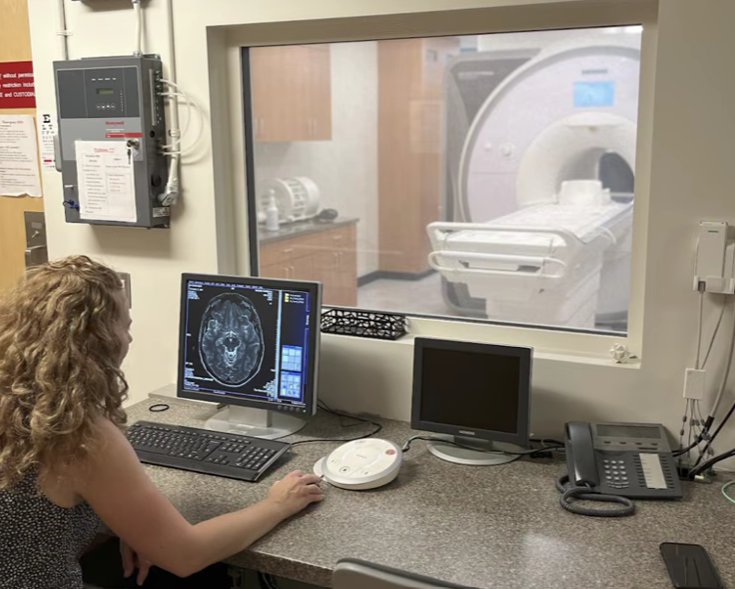
In an extraordinary first-of-its-kind study, Liz, a neuroscientist and expectant mother, teamed up with fellow researchers to map her own brain from conception through postpartum. Scanning her brain 26 times across three trimesters and beyond, she provided science with its clearest, most detailed map of maternal neurobiology to date.
Neuroplasticity in Action: The Shrinking (and Specializing) Cortex
The scans taken during Liz's first trimester revealed something that might initially sound alarming: her grey matter was decreasing in volume. However, Laura Pritchard, a cognitive neuroscientist, explains that a decrease in volume is not synonymous with a loss of function.
Just as synaptic pruning sculpts an adolescent brain into an efficient adult brain, pregnancy triggers a targeted "pruning" phase. The brain sheds redundant neural connections, fine-tuning circuits to become faster and more specialized for parenting, bonding, and threat detection.
The Second and Third Trimesters: Streamlining for Motherhood
The brain's adaptation becomes especially dramatic in the later stages of pregnancy:
- Second Trimester: Liz's brain connectivity peaked. Her white matter—which connects distant brain regions and allows rapid cross-talk—strengthened significantly. This enhanced communication network prepares the mother to coordinate sensory, emotional, and social cues quickly.
- Third Trimester: Her cortex was thinner than at any other point during the pregnancy. Because the cortex handles high-level functions like reasoning, empathy, and self-control, this "cortical thinning" is viewed as a form of neural refinement. The brain is streamlining itself to focus entirely on what matters most in this new life stage.

Beyond Birth: The Advantage of "Mommy Brain"
The neurological transformations don't stop once the baby is born. During the first year postpartum, regions linked to empathy, memory, and emotional regulation continue to change.
When new mothers complain about "mommy brain," scientists suggest viewing it through the lens of adaptation. A mother might forget where she put her keys, but simultaneously, her brain is managing a massive new cognitive load: tracking an infant's sleep patterns, monitoring their food intake, and constantly adapting to their needs.
A Scientific Blind Spot
Despite affecting 85% of women, the maternal brain has been a massive scientific blind spot. Liz's self-study was just the beginning. The Maternal Brain Project is now following more women (and their partners) to map how all kinds of brains respond to caregiving.
Understanding these physical brain changes is the first step toward answering critical, lingering questions: Why do some women experience postpartum depression? And why do others develop neurological symptoms like migraines or epilepsy during pregnancy? As science finally begins to treat the maternal brain with the attention it deserves, the myth of the "broken" mommy brain can be replaced by the reality of an incredibly adaptive, specialized organ.